Permanent Roofline Lighting vs. Traditional Holiday Lights
What homeowners should know before deciding
For a lot of homeowners, holiday lighting has always been a seasonal tradition.
Pull out the boxes. Untangle strands. Climb the ladder. Get everything just right before the weather turns.
It’s something people have done for years.
But recently, more homeowners are starting to ask a simple question:
Is there a better way to do this?
That’s where permanent roofline lighting comes into the conversation.
If you’ve been weighing the two options, here’s a straightforward look at how they compare and what makes the most sense, depending on what you’re looking for.
The traditional approach: familiar, but temporary
There’s something nostalgic about putting up holiday lights.
It’s familiar. It’s something a lot of people have always done.
But it also comes with a few realities:
It takes time every single year
It often involves ladders, roofs, and colder weather
Lights can fail, burn out, or need replacing
Everything has to come down just a few weeks later
For some homeowners, that’s part of the tradition.
For others, it starts to feel like a lot of effort for something that’s temporary.
Permanent roofline lighting: built once, used year-round
Permanent lighting takes a different approach.
Instead of installing and removing lights every season, the system is professionally installed along your roofline and becomes part of your home, which can easily be integrated with our additional outdoor lighting services.
From there, it’s always ready to go.
That means:
no seasonal setup or teardown
no climbing ladders
no last-minute fixes when something stops working
When the holidays come around, your home is already prepared.
How they compare, side by side
1. Time and effort
Traditional lights: Requires yearly planning, setup, and takedown.
Permanent lighting: Installed once. Ready whenever you need it.
2. Safety
Traditional lights: Often involve ladders, rooftops, and working in colder conditions.
Permanent lighting: Installed professionally, so there’s no need to put yourself in that position again.
3. Appearance and consistency
Traditional lights: Can look great, but results vary year to year depending on setup and condition of the lights.
Permanent lighting: Clean, consistent lines that are designed specifically for your home.
4. Daytime visibility
Traditional lights: Visible during the day, often hanging loosely or clipped on.
Permanent lighting: Low-profile and designed to blend into your home’s architecture.
5. Flexibility
Traditional lights: Limited to the colors and patterns you install that season.
Permanent lighting: A wide range of color and pattern options available whenever you want them.
6. Year-round value
This is where the biggest difference shows up.
Traditional lights: Used for a few weeks out of the year.
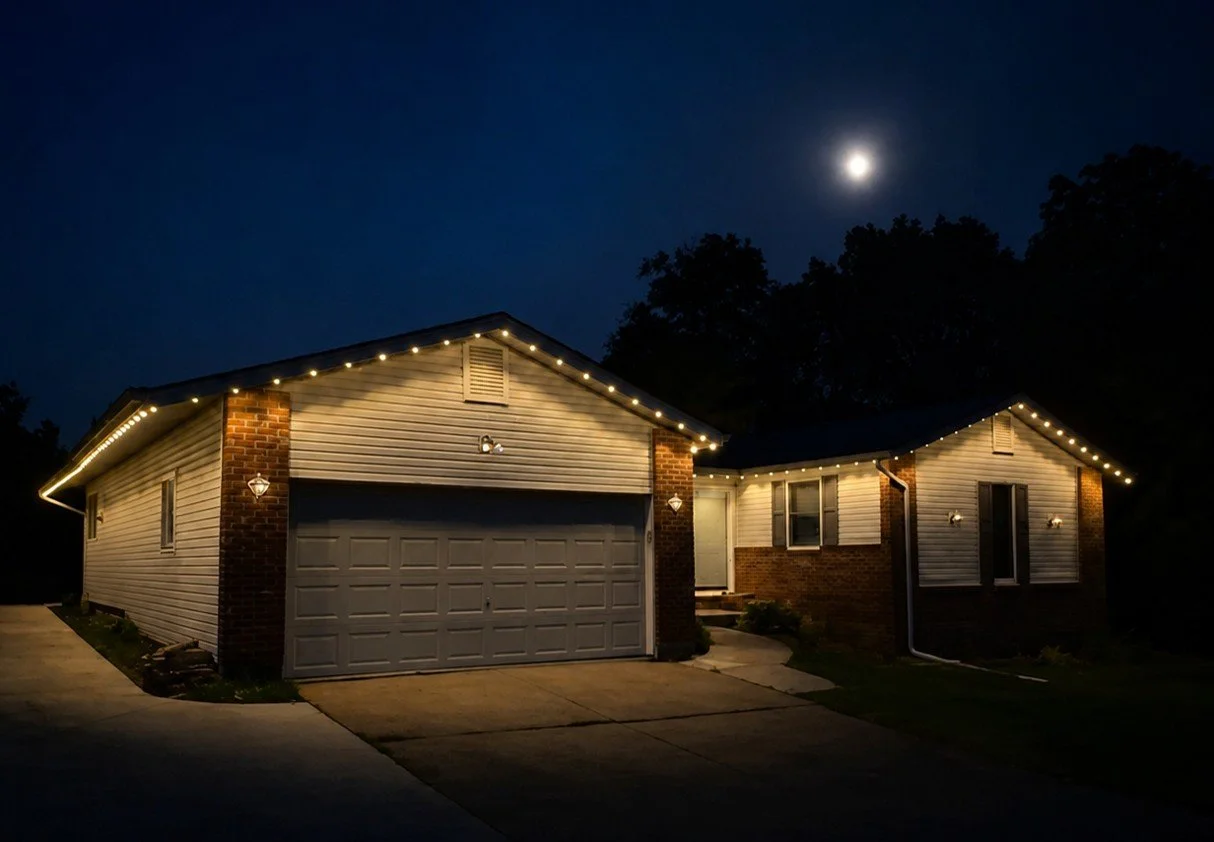
Permanent lighting: Can be used year-round—not just for holidays, but for everyday accent lighting, special occasions, and even added visibility around your home at night.
Beyond the holidays
One of the biggest shifts we’ve seen is how homeowners start using lighting once it’s always available.
It’s not just about Christmas anymore.
It becomes part of how your home looks and feels every night.
A subtle, warm glow can:
highlight architectural features
make your home feel more complete
add a sense of comfort when you pull in at night
And when you want to change things up, you can.
So which one is right for you?
There’s no one-size-fits-all answer.
If you enjoy the process of putting up lights each year and don’t mind the time and effort, traditional lighting can still be a great option.
But if you’re looking for something that’s:
easier
more consistent
and more versatile
Permanent roofline lighting is worth considering.
One final thought
Most people don’t make the switch because they’re trying to do something flashy.
They do it because they want something simpler and something they can enjoy more often.
And once it’s installed, it tends to become one of those upgrades that just makes sense.
If you’re curious what permanent lighting could look like on your home, we’d be happy to walk your property and design a custom lighting plan with you.